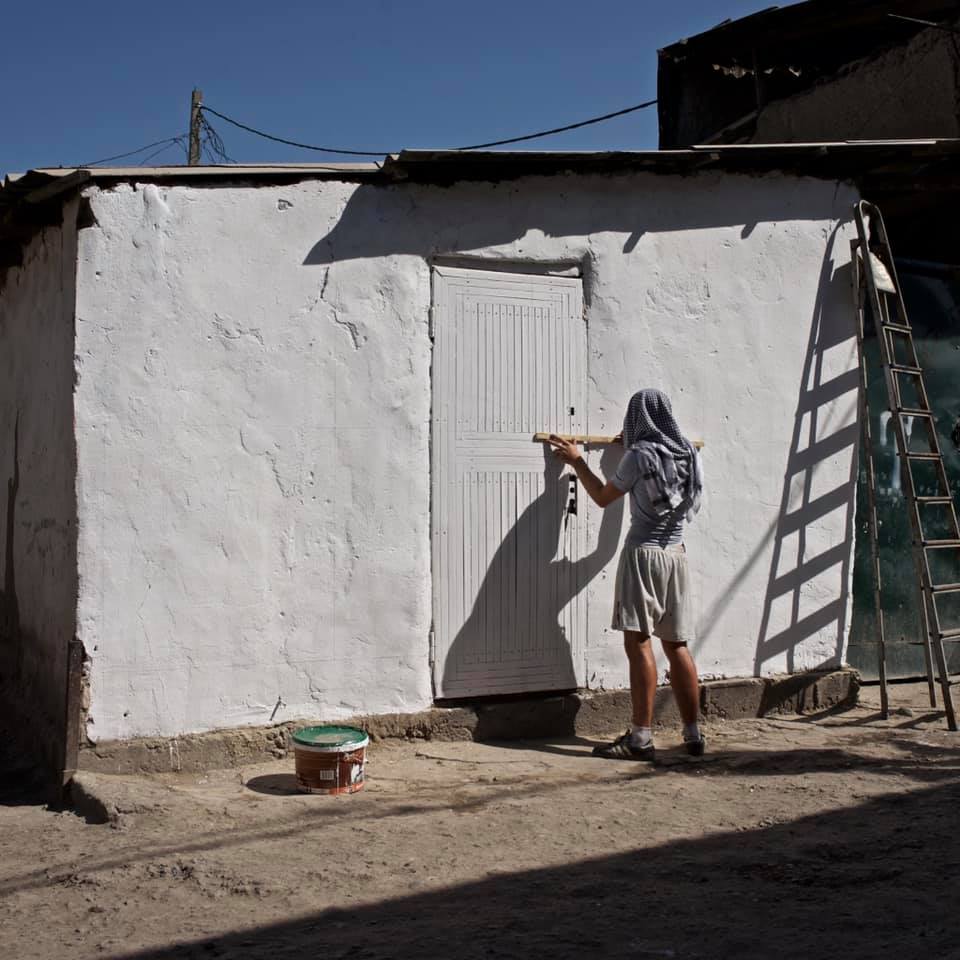
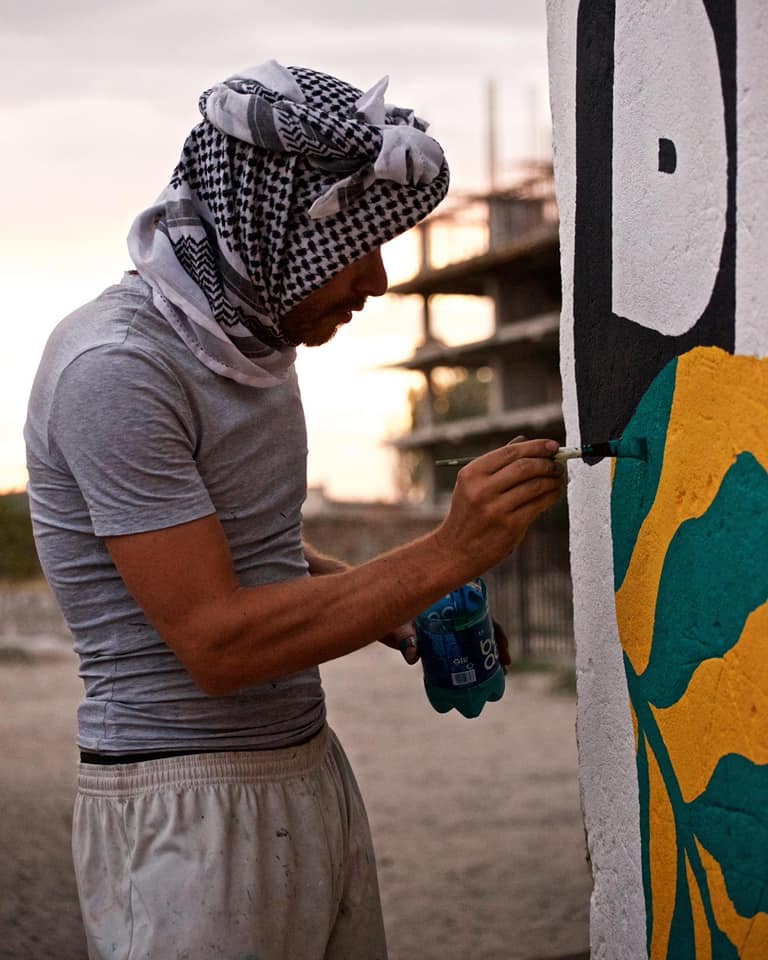
Leaving a slum in which I’ve been working for a month is always a heartbreaking experience. I’ve been through this so many times but I never really get used to it. I want to thank all the inhabitants of Zavodskoy Paselok for being such good hosts. It amazes me how much we understood each other even though we only spoke 25 words in common. Art really has this unique power!

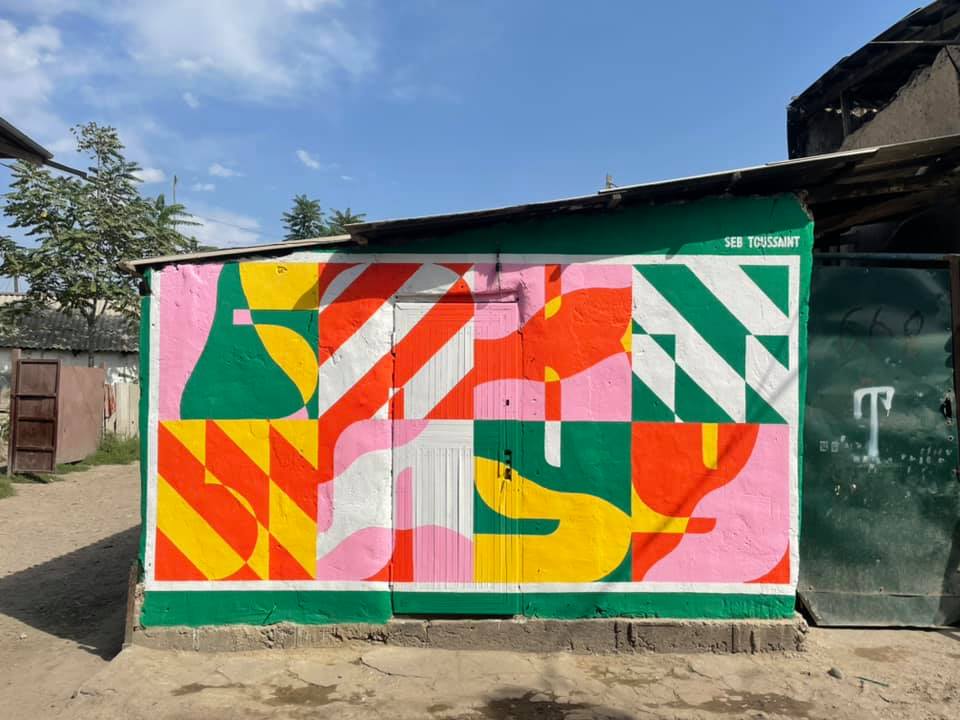
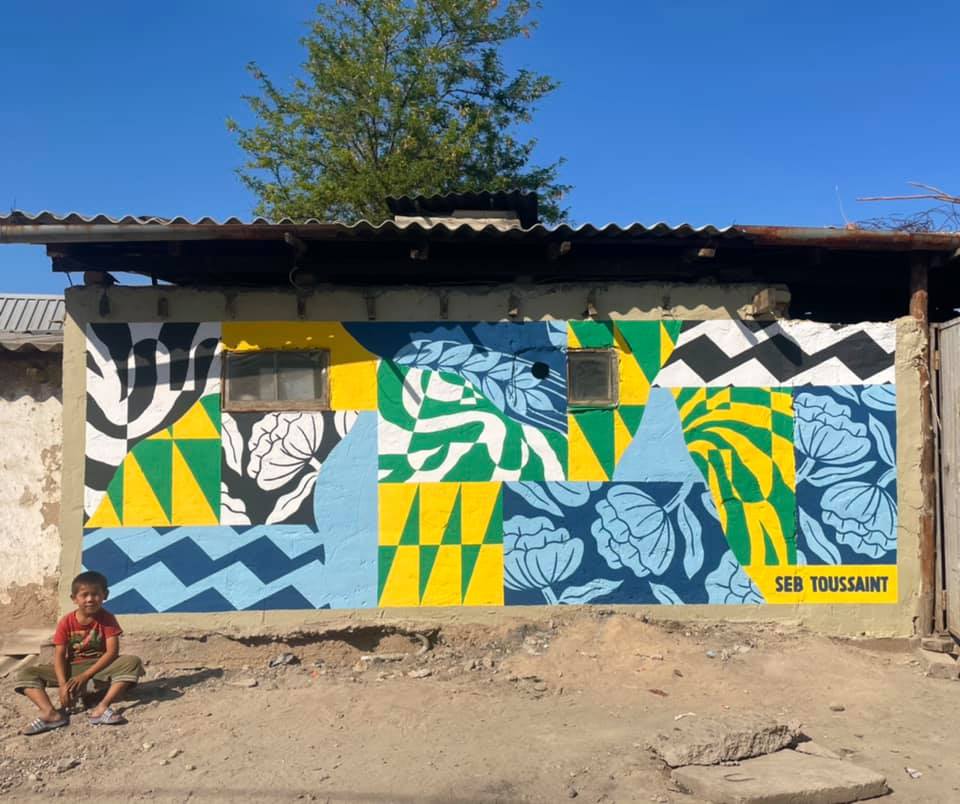
I’m very happy to have painted these 8 different murals in the slum. The last one is the 214th mural since the beginning of « Share The Word Project » in 2013 in Jakarta. Massive thank you to Dudu for his help, and congratulations to my art partner Spag Bertin for his brilliant images.

I also want to thank the people who’ve been following me, encouraging me and those buying my artwork. I self fund this project so if we’re able to do this, it’s thanks to you.
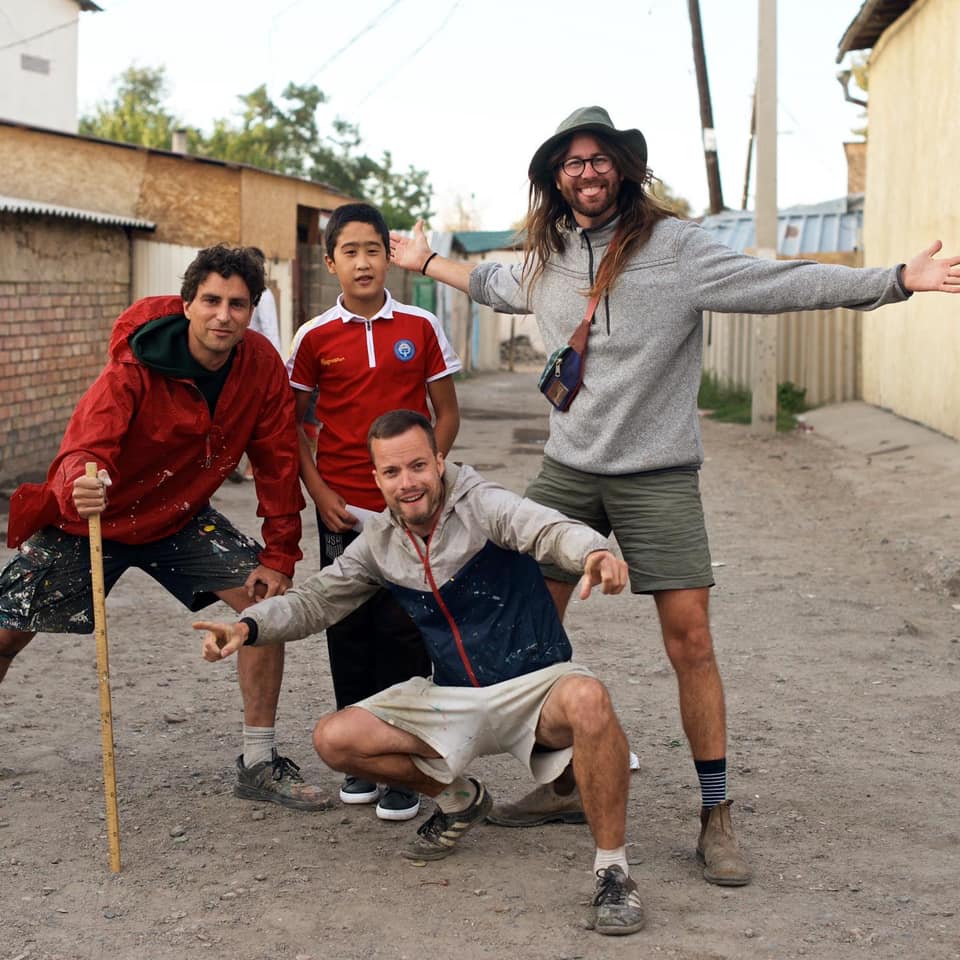
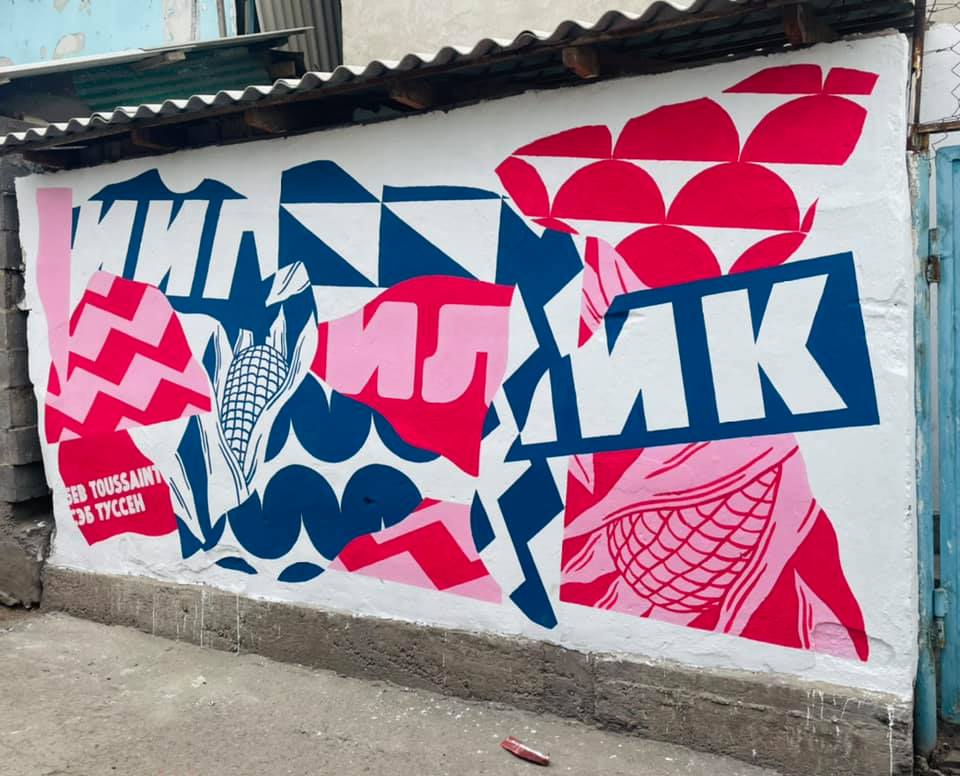
Doni – ИЙГИЛИК

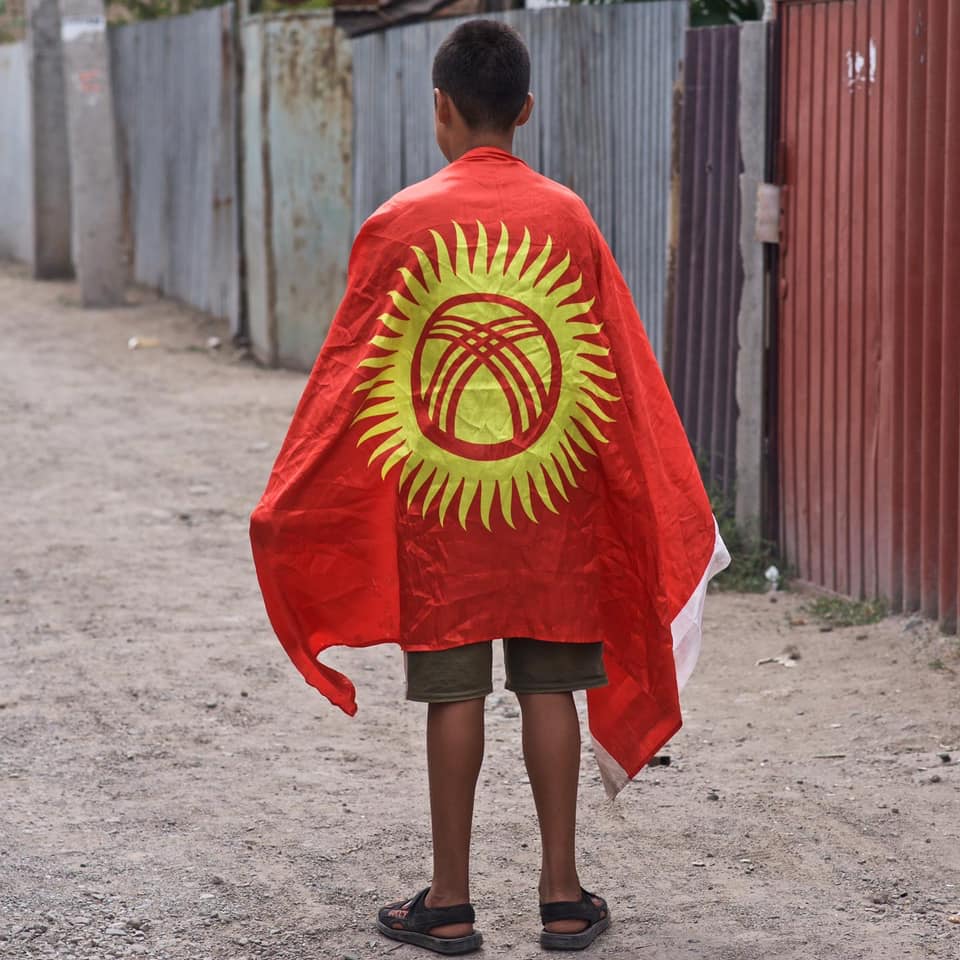
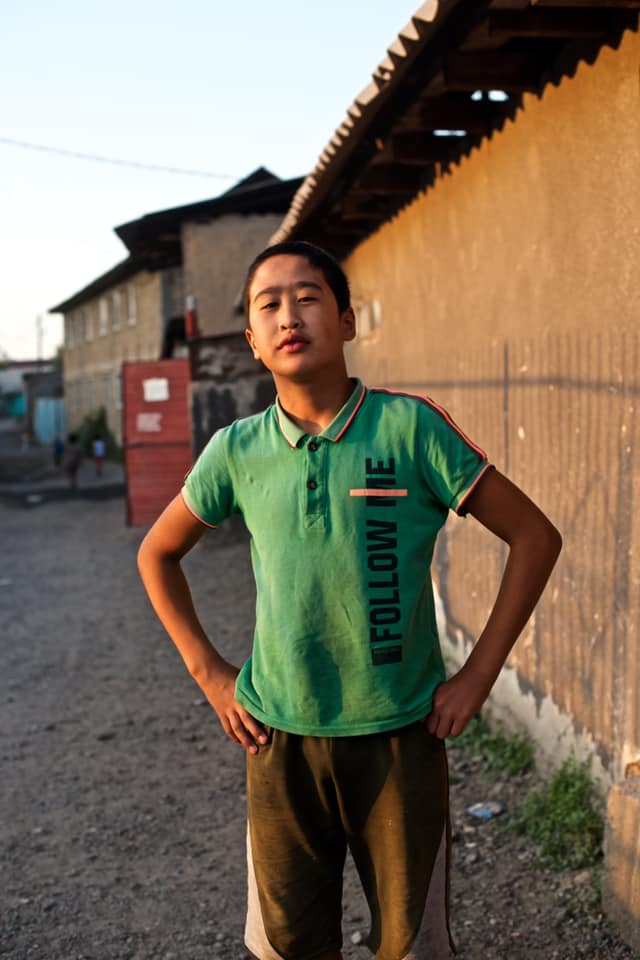
Doni, 12 years old, chose the word “ИЙГИЛИК” (“good fortune” in Kyrgyz).

This word is for the kids of his generation who are hoping for a bright future in a very young country. (A couple of weeks ago, Kyrgyzstan celebrated 30 years of independence).


Since the day we arrived, Doni has been extremely helpful, always watching out in case we need anything and smiling in the process. He has been explaining our project to everyone, keeping our paint in his home at night and making sure we know where the closest tap is.

He only speaks a bit of Russian and we barely know a few words, but somehow he knows exactly what’s going! Super efficient and always smiling, a top lad!

I don’t know how much of the future is decided on good fortune or on will power, but for sure his community is fortunate to have youth like him!

The least we could do was to paint the wall he sees every morning in front of his gate!

Portrait by Spag Bertin

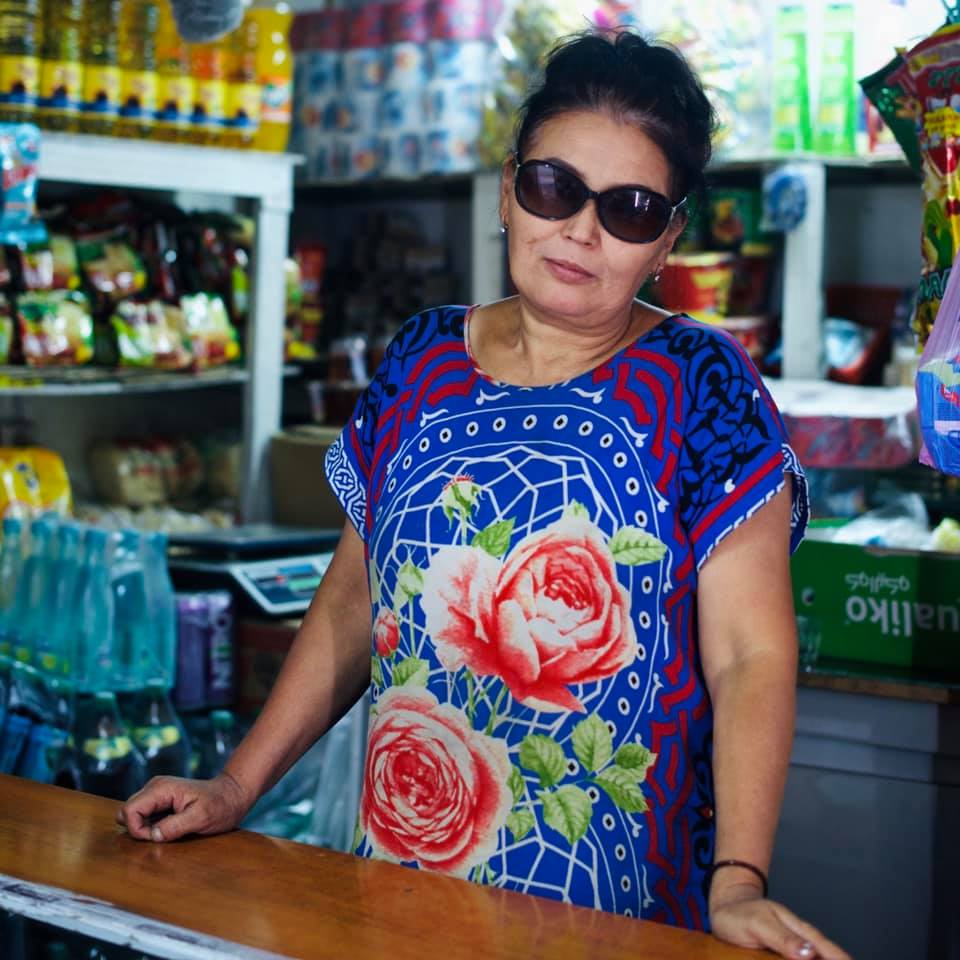
Rosa – Бактылу

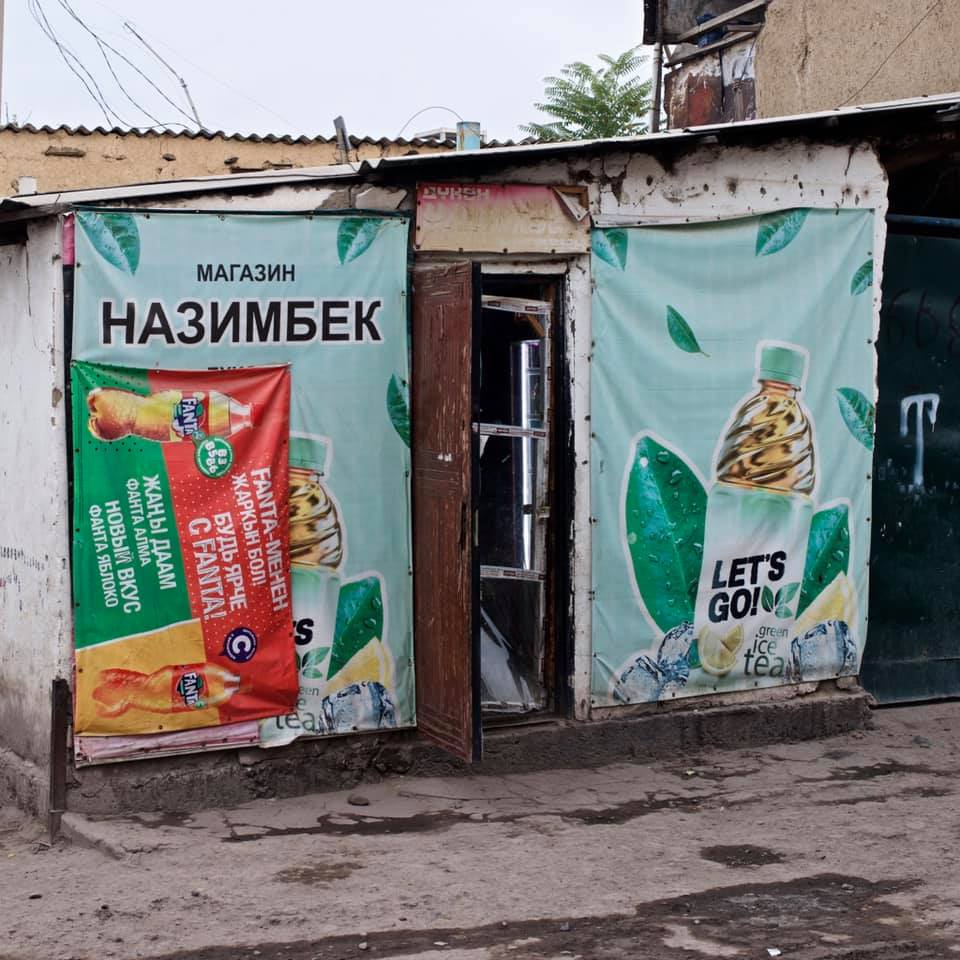
Rosa chose the word “Бактылуу” (“Happyness” in Kyrgyz). Rosa was born in a modest family in Tadjikistan and moved to Kyrgyzstan when she was young. She is now a shopkeeper in the slum and sells tea, Snickers, vodka and an array of ridiculously sweet drinks kept in her fridge. She told me she is happy simply because she has a job and has kids, and even a grandchild!

We’ve known Rosa for a few weeks now because we’ve been getting our water from her shop, and she’s been cooking for us. Knowing her, it was easy to guess that she would choose the word “happiness”.

Umar – жашоо

Umar chose the word “жашоо” (life in Kyrgyz)

Life hasn’t always been easy for him.
Most recently, when the coronavirus pandemic kicked off and people stopped travelling, he lost his job as a tour guide, forcing him to leave his town and get a cheap place in this slum of Bishkek. However, being a righteous man and a good muslim is what makes his life happy no matter what.

Umar has been helping us a lot here in the slum since he is generous and speaks good English. On the first day he helped us explain our project to the other inhabitants. Since then, we’ve been having all sort of conversations about islam, English grammar, blue men, abstract art, sheep heads, god’s sense of humour, and basically about life.

(Portrait by Spag Bertin)

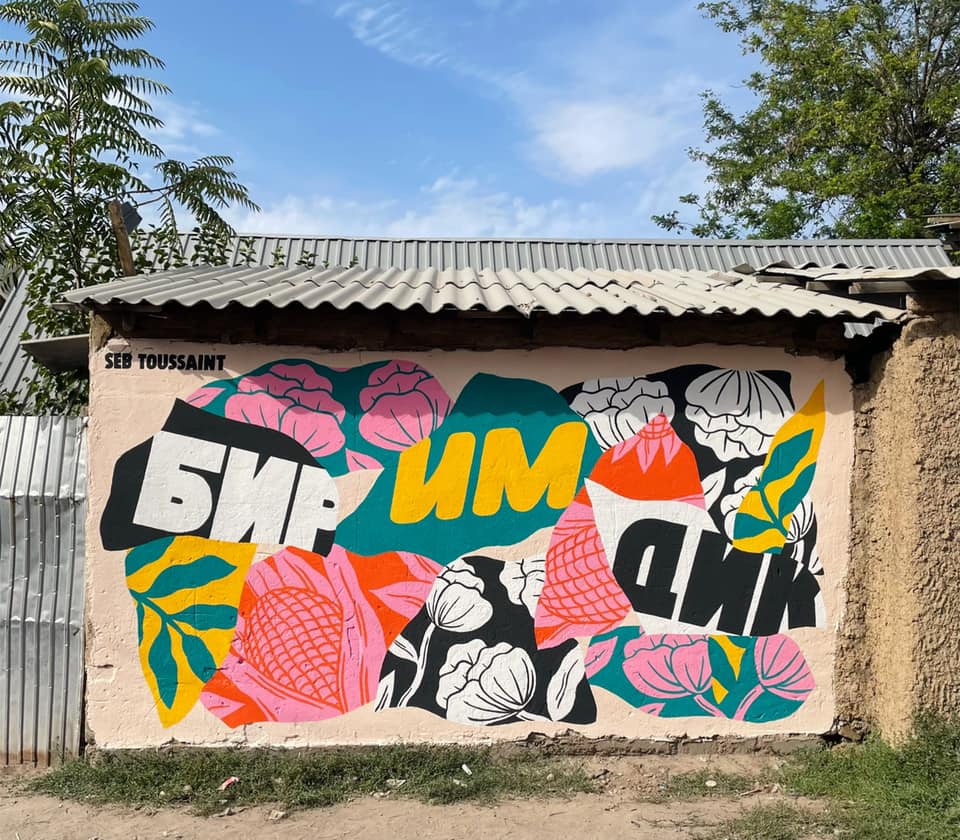
Zamir – Биримдик

Zamir chose the word “Биримдик” (“unity” in Kyrgyz).

He told me that while there is a sense of unity in the slum, it could be a lot better.

The neighbourhood is populated by Kyrgyz and other central Asian ethnic groups, but also by Slavic Russians who stayed after the collapse of the USSR. I was surprised to notice that the Slavic Russians in the slum only speak Russian. And even though many of the Kyrgyz can also speak Russian, there clearly is a language barrier between certain families.

During my time here, I have been seeing Slavic Russian kids playing with central Asian kids and I imagine – and hope – that their generation will move things forwards

Zavodskoy Poselok

I spend most of my days painting and having conversations with my very limited Russian vocabulary, the odd word in Kyrgyz and greetings in Arabic. “Assalamu’aleikum, you good? Me Normandy and England. Nice? Thank you! “ .

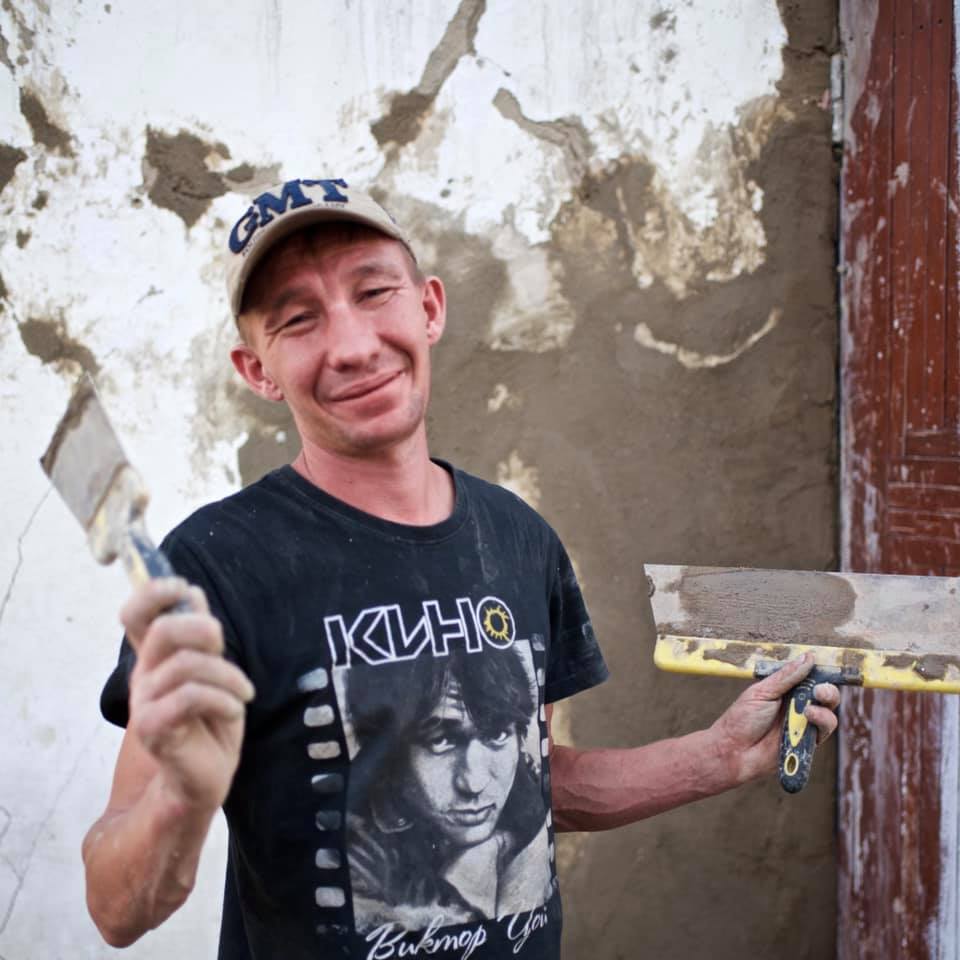
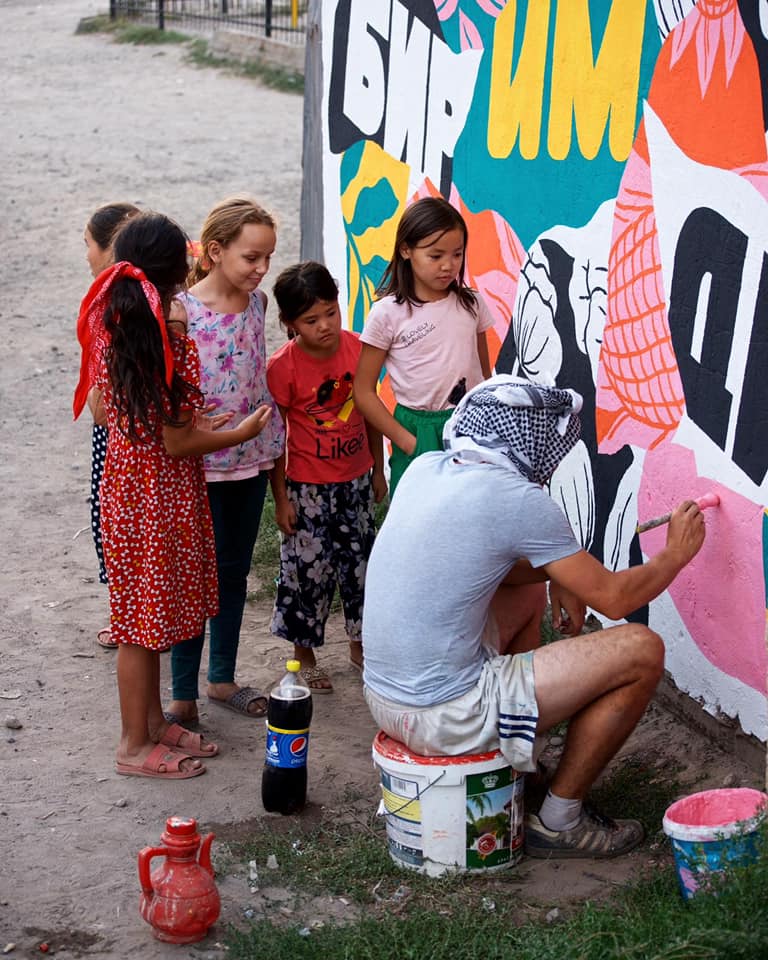
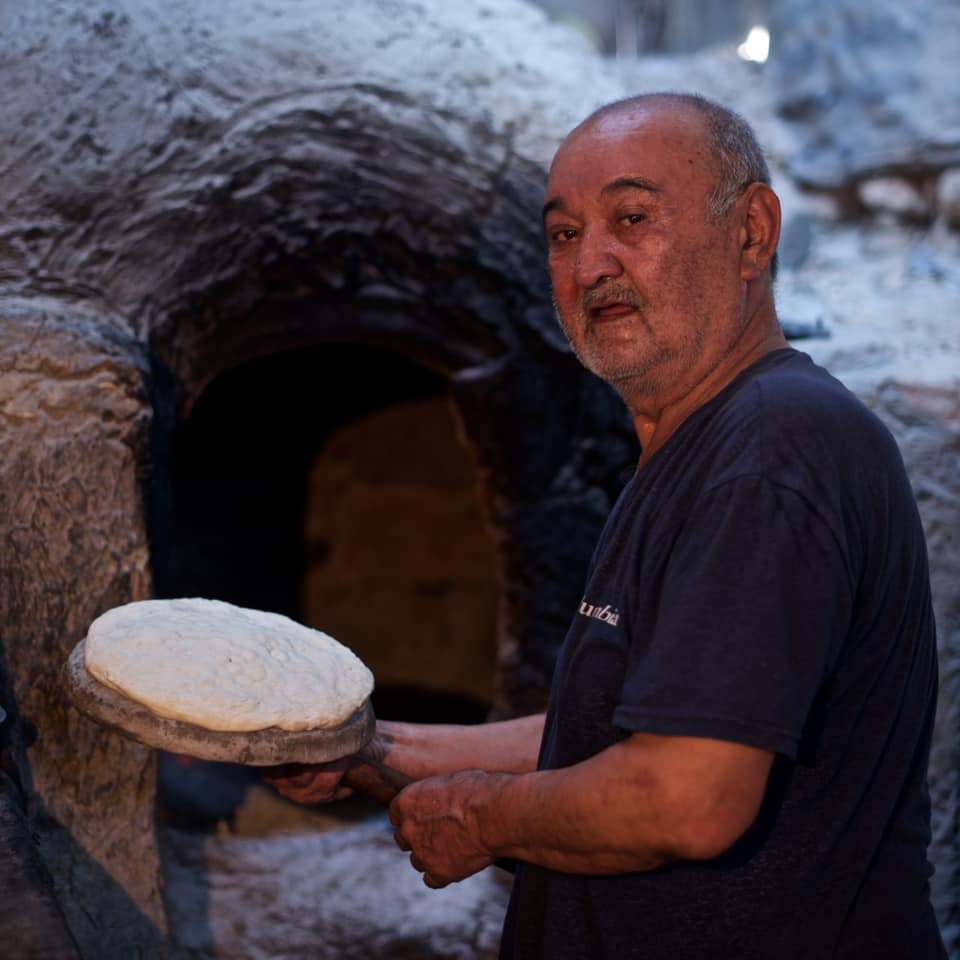
The kids are fascinated by the murals, by the language we speak, and by the way we mix colours in plastic tubs. They hang around us, watching us work, playing with stones, climbing fences and adding scabs to generously scared knees. We’ve never had a deep conversation, but we know each other. Emo is always ready to fetch water for us, Daniel can get us plastic bags or sticks to mix the paint, Albina comes over and punches our fists with excessive force because that’s how tough girls say hi.

I doubt they understand how we’ve landed here, but as long as there’s life out on their streets, I guess they’re happy. And so am I.

Zavodskoy Poselok

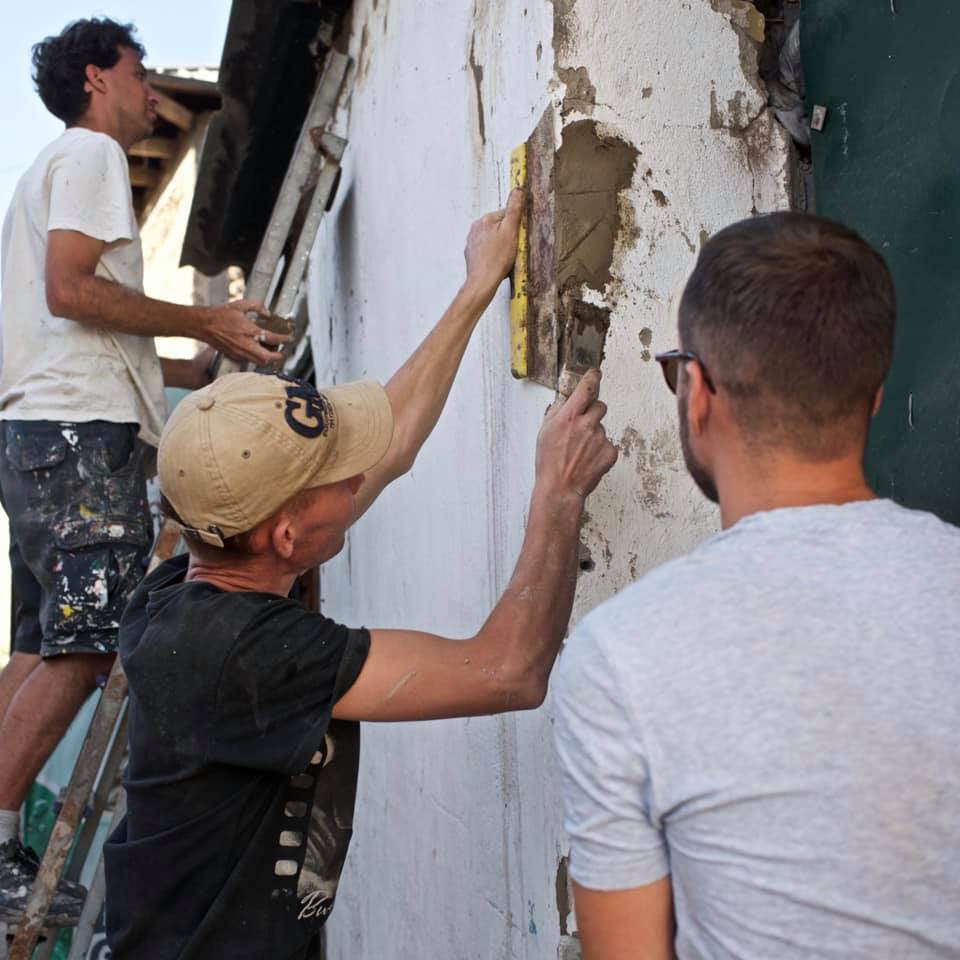
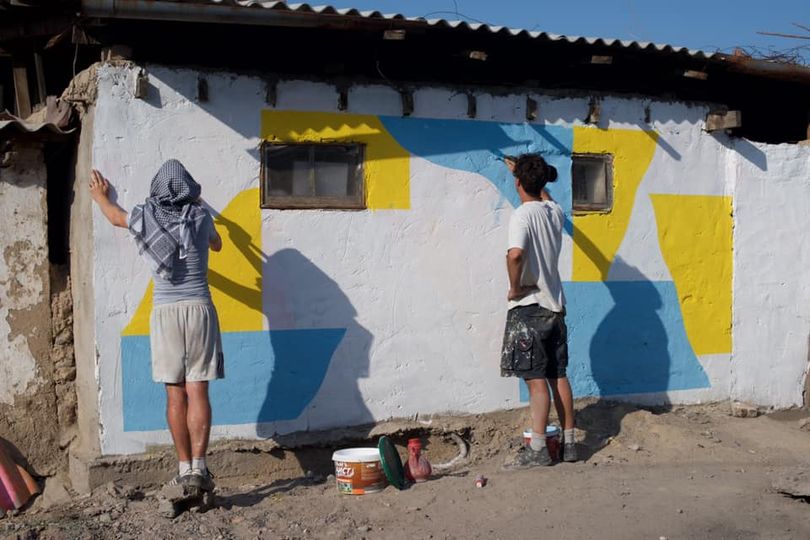
I paint my murals freestyle so I don’t know what each one will look like while I’m painting them.

I spent a couple of days on this one and then decided I didn’t like where it was going. So I just painted it back in white and started again.

This rarely happens but if I’m not entirely happy with my work I can’t leave the wall.

Altynai – тынчтык

Altynai chose the word тынчтык (=Peace in Kyrgyz).

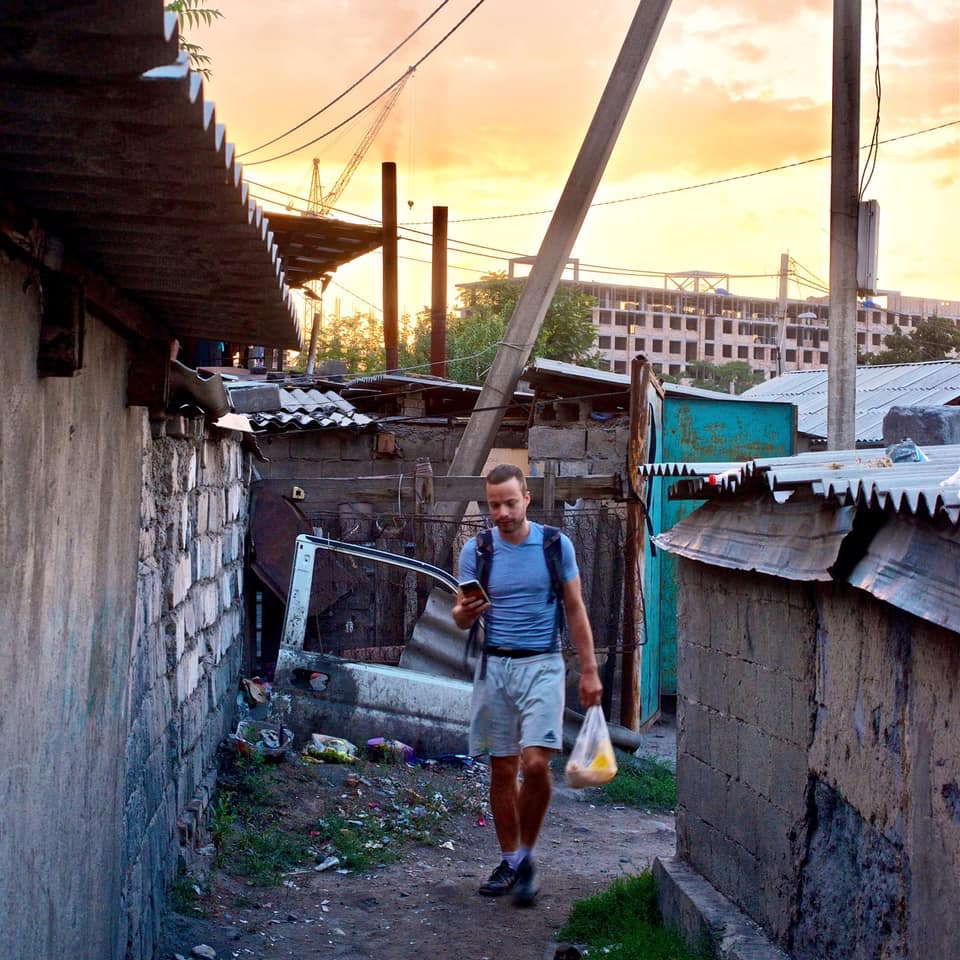
She lives in a small room in Zavodskoy Paselok, a slum that is known in Bishkek for being rough. She told me that she would like to live a peaceful life here without the junkies, thieves and criminals. She has had money stolen from her in the past and hopes that the neighbourhood will change in the coming years.

Zavadskoy Paselok isn’t ruled by armed gangs like slums I’ve worked in in Brazil, Kenya or the Ivory Coast. But like in many low income neighbourhoods, alcohol is a big problem here and vodka related fights and robberies are common.

In a place where most people are so generous and respectful, I sometimes forget that this is actually a tough slum. That’s until yet another limping troublemaker smelling of potato acetone comes our way, switching our defensive mode on.